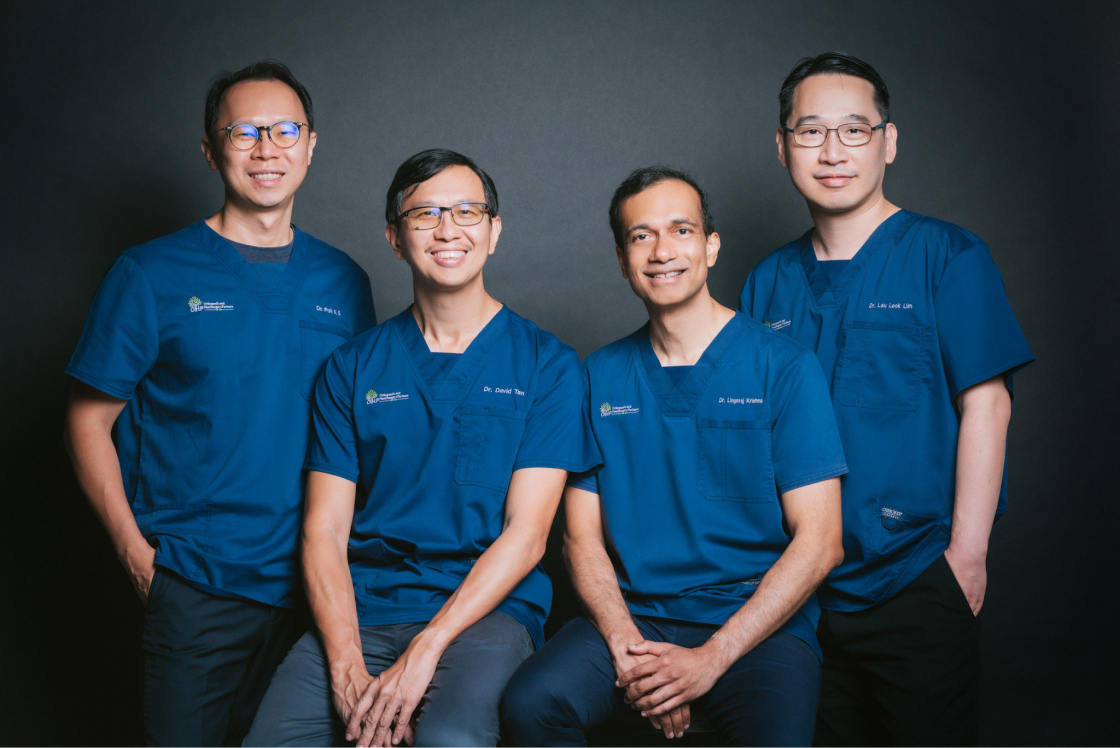
Schedule your consultation with our experienced Orthopaedic Surgeon specialising in children’s spine today.
Schedule Your Consultation with Our Experienced Spine Orthopaedic Surgeon Today.
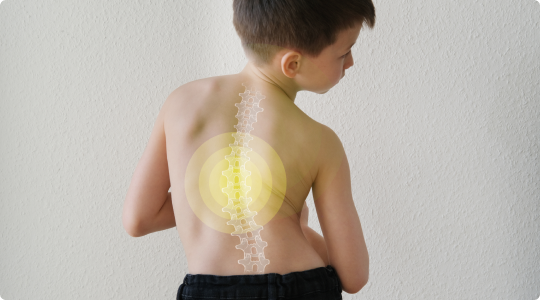
Scoliosis in children is a condition where the spine when viewed from either the front or the back is not straight. It curves sideways, forming an ‘S’ or ‘C’ shape that distorts the body contour. While mild cases may not cause significant problems, moderate and severe curves may become progressively bigger with time even in adulthood thus affecting heart and lung function. Early detection by screening, particularly of the tweeners, is crucial. Management with a good brace worn full-time may avert the need for surgery.
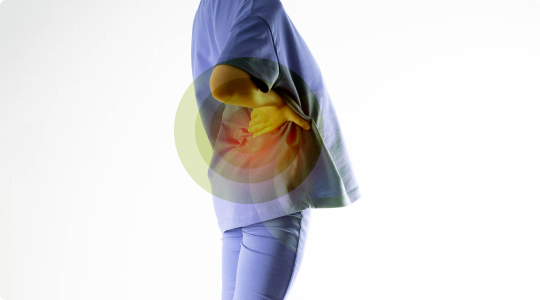
Spondylolysis in children is a condition where a small fracture occurs in the vertebrae, particularly at L5. This is often due to repetitive stress or overuse especially in sports involving hyperextension of the back. A child who is a gymnast, ballet dancer, long jumper, tennis player, or footballer with persistent back pain may have spondylolysis.
Kyphosis in children is a condition where the thoracic spine is protruding backward, creating a rounded back or hunchback appearance. Factors such as poor posture, congenital bony abnormalities or mismatch of growth from Scheuermann’s disease may result in kyphosis. In flexible kyphosis, stretching or braces may be useful. In fixed and severe kyphosis, surgery may be required.
Scoliosis in children is a condition where the spine when viewed from either the front or the back is not straight. It curves sideways, forming an ‘S’ or ‘C’ shape that distorts the body contour.
While mild cases may not cause significant problems, moderate and severe curves may become progressively bigger with time even in adulthood thus affecting heart and lung function.
Early detection by screening, particularly of the tweeners, is crucial. Management with a good brace worn full-time may avert the need for surgery.
Spondylolysis in children is a condition where a small fracture occurs in the vertebrae, particularly at L5. This is often due to repetitive stress or overuse especially in sports involving hyperextension of the back.
A child who is a gymnast, ballet dancer, long jumper, tennis player, or footballer with persistent back pain may have spondylolysis.
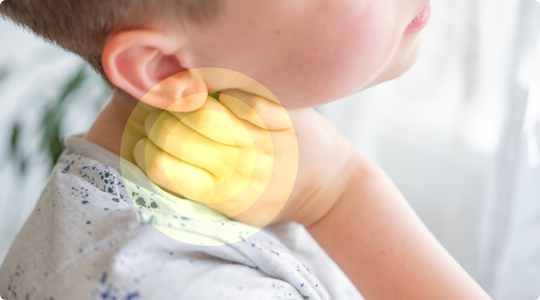
Kyphosis in children is a condition where the thoracic spine is protruding backward, creating a rounded back or hunchback appearance.
Factors such as poor posture, congenital bony abnormalities or mismatch of growth from Scheuermann’s disease may result in kyphosis.
In flexible kyphosis, stretching or braces may be useful. In fixed and severe kyphosis, surgery may be required.
Persistent or recurrent pain of the back that may involve the gluteal or buttock region. In infants or non-communicable children crying may be the only symptom.
Tilted and rotated neck and head that may be associated with recent cough, flu or fever. Some may have recent trauma.
Difficulty in bending, twisting, or moving the back freely.
Pain, numbness, or tingling sensation that radiates from the gluteal region to the thigh and leg usually on a single leg but may involve both legs.
Pain, numbness, or tingling sensation that radiates from the shoulder to the forearm and hand.
Scoliosis may cause uneven shoulders and asymmetrical waistline. Some patients may have difficulty fitting clothing including undergarments.
Excessively short or tall stature may be the result of abnormal spinal growth associated with an underlying disorder.
Excessive hunchback can be a result of poor posture or underlying structural abnormalities. While poor posture can be fixed easily, structural abnormalities such as misshapen spinal bones may require further intervention such as bracing or surgery.
Persistent or recurrent pain of the back that may involve the gluteal or buttock region. In infants or non-communicable children crying may be the only symptom.
Tilted and rotated neck and head that may be associated with recent cough, flu or fever. Some may have recent trauma.
Difficulty in bending, twisting, or moving the back freely.
Pain, numbness, or tingling sensation that radiates from the gluteal region to the thigh and leg usually on a single leg but may involve both legs.
Pain, numbness, or tingling sensation that radiates from the shoulder to the forearm and hand.
Scoliosis may cause uneven shoulders and asymmetrical waistline. Some patients may have difficulty fitting clothing including undergarments.
Excessively short or tall stature may be the result of abnormal spinal growth associated with an underlying disorder.
Excessive hunchback can be a result of poor posture or underlying structural abnormalities. While poor posture can be fixed easily, structural abnormalities such as misshapen spinal bones may require further intervention such as bracing or surgery.
Don’t Wait—Check Your Spine Today!
For mild spinal disorders & deformities, especially if the curve is not worsening, regular monitoring may be sufficient. The patient may need periodic check-ups to track any changes in abnormalities.
For growing children and adolescents with spinal disorders & deformities, non-surgical brace management may be recommended. The purpose of the brace is to prevent any curvature or abnormalities from worsening as the child continues to grow. When identified early, paediatric spinal disorders & deformities can be treated with bracing to avoid the need for surgery in the later years.
For more severe cases, surgery may be necessary to stop its progression.
Dr Lau is a highly skilled orthopaedic surgeon with more than 13 years of experience in the practice of spine surgery. He is experienced in both the operative and non-operative care of spinal conditions that span a wide spectrum of pathologies across all age groups. Whilst in public service, he routinely managed a high volume of patients and performed hundreds of surgeries annually.
He embraces technology such as vertebral-body tethering (VBT), robotic surgery, endoscopic deformity correction surgery and 3-D printing, where suitable, to optimise the care and safety of his patients. In the course of his work, many of his patients benefitted from his personal touch.
He is a recognised leader in the field of spine surgery and presents regularly at national and international medical conferences. He regularly volunteered his expertise at the Cerebral Palsy Alliance of Singapore (CPAS).
Languages Spoken: English, Mandarin, Malay, Chinese dialects (Hokkien, Cantonese)
Schedule a consultation for your child to ensure their back stays healthy and strong.
If you frequently experience joints giving way, feel unstable, or if you have recurrent dislocations.
If you experience persistent numbness or tingling in your limbs, especially if it’s accompanied by weakness.
Swelling around a joint that doesn’t improve with rest and elevation may indicate an underlying orthopaedic issue.
Following a significant injury, such as a fracture, dislocation, or sports-related injury, it’s essential to consult with an orthopaedic surgeon to assess the extent of the damage and determine the best course of treatment.
If you notice a significant reduction in your ability to move a joint or if you experience stiffness that impairs your mobility.
If you have persistent pain in your joints, muscles, or bones that don’t improve with rest, over-the-counter medications, or other non-invasive treatments.